Shares of tokenized vaults are tokenized. When a user subscribes, the amount of vault shares to issue is calculated based on the current AUM of the vault. When a user redeems their shares, the shares get burned and withdrawal assets can be claimed.
Subscriptions
GLAM tokenized vaults support two types of subscriptions: instant subscription and queued subscription.
Instant Subscriptions
Vault shares are issued in the same transaction where the user makes the deposit. Instant subscription is preferred if vault AUM can be immediately calculated and the amount of shares can be determined instantly.
Queued Subscriptions
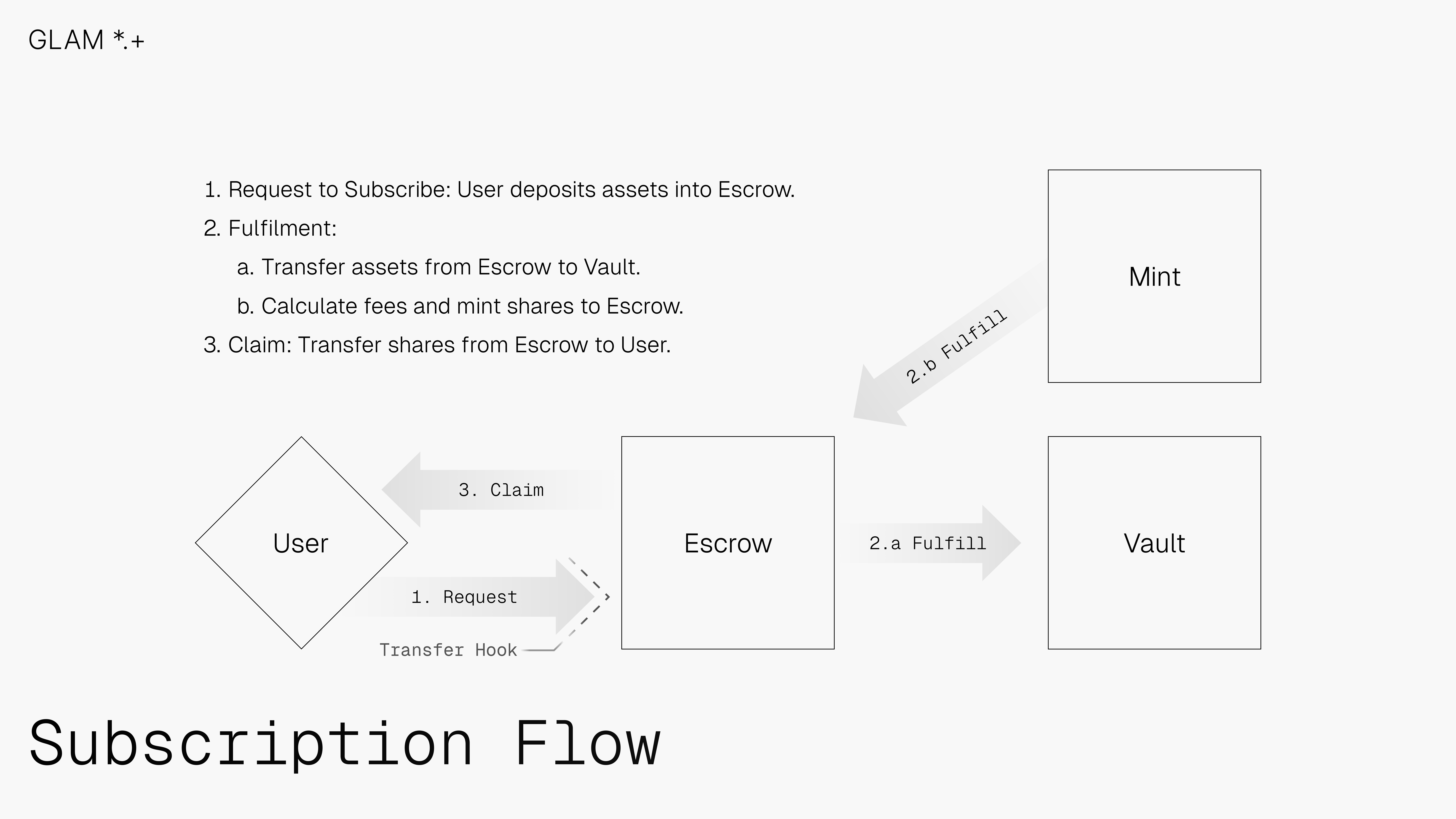
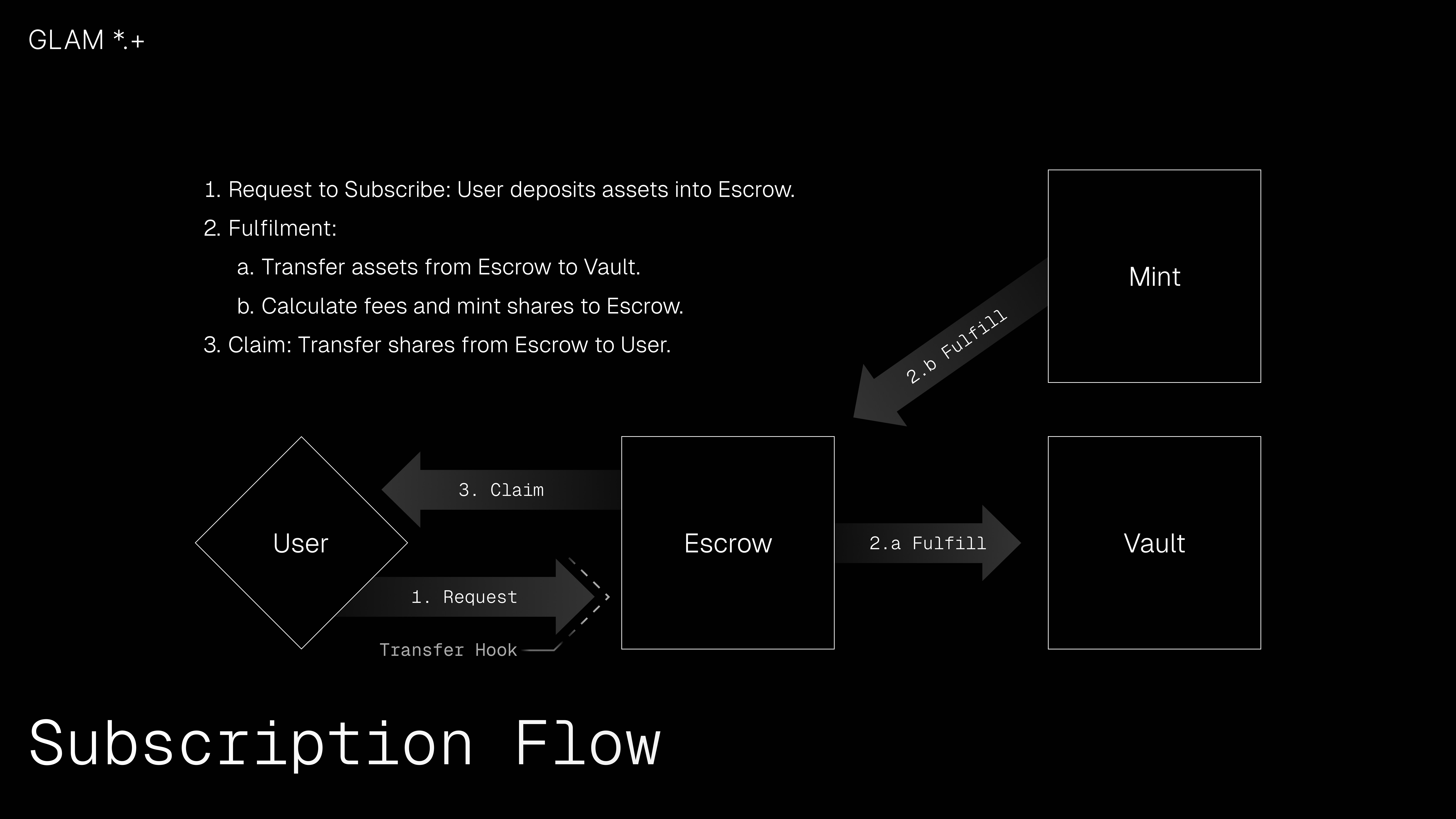
In case vault AUM can only be calculated with a delay, queued subscription should be used. The diagram below shows the subscription flow:
Redemptions
GLAM tokenized vaults support both instant and queued redemptions, depending on the strategy and configuration of the vault.
Instant Redemptions
Instant redemption allows users to redeem shares and receive withdrawal assets in a single transaction. This mode is enabled when the vault’s notice period and settlement period are both set to 0.
Instant redemption is only possible if the vault has sufficient liquidity to fulfill the request at the time of redemption.
This mode is recommended for tokenized vaults with simple, highly liquid strategies (e.g., token baskets).
Queued Redemptions
If the vault is configured with a non-zero notice period or settlement period, redemptions are queued and expected to be fulfilled asynchronously.
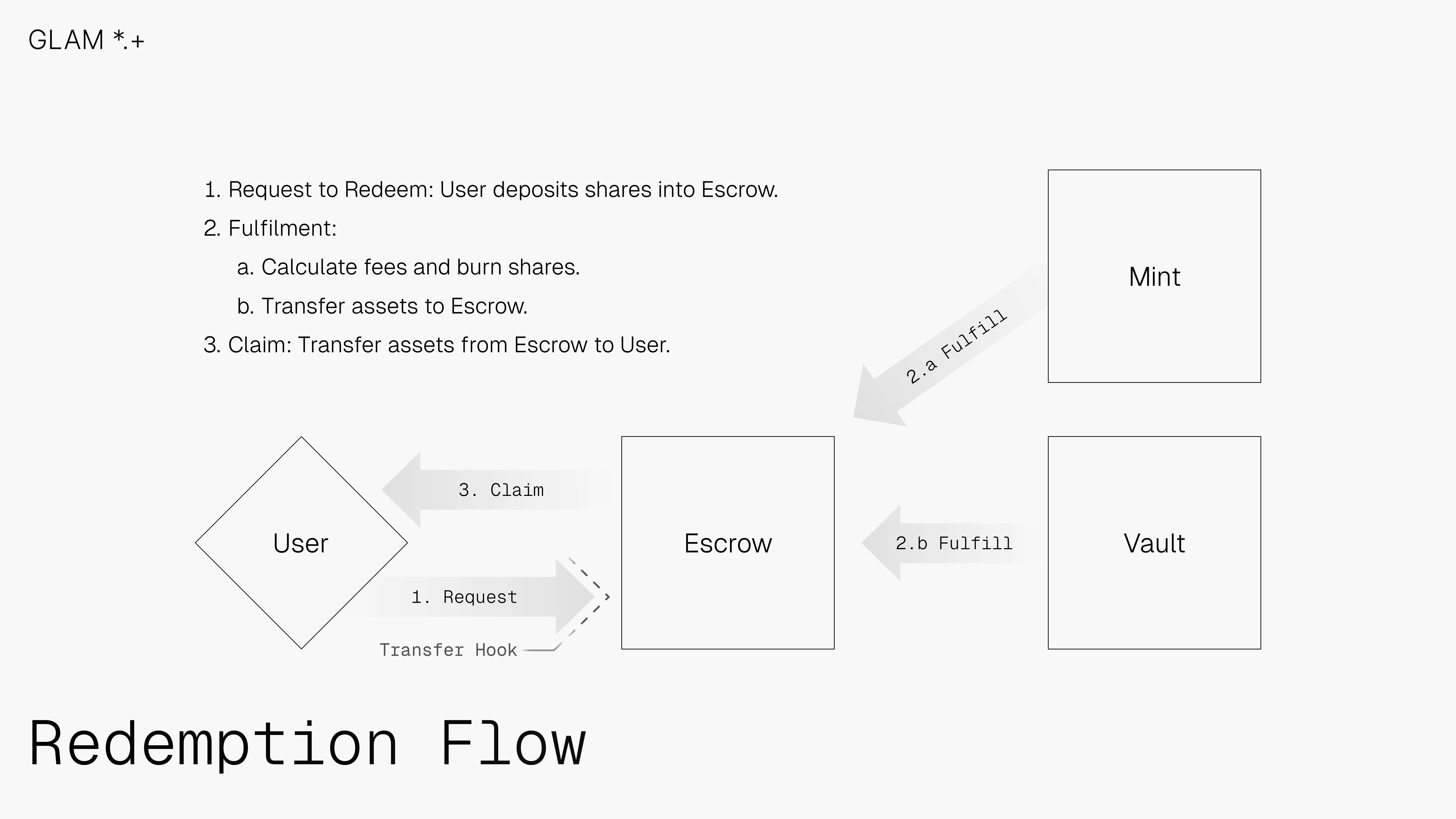
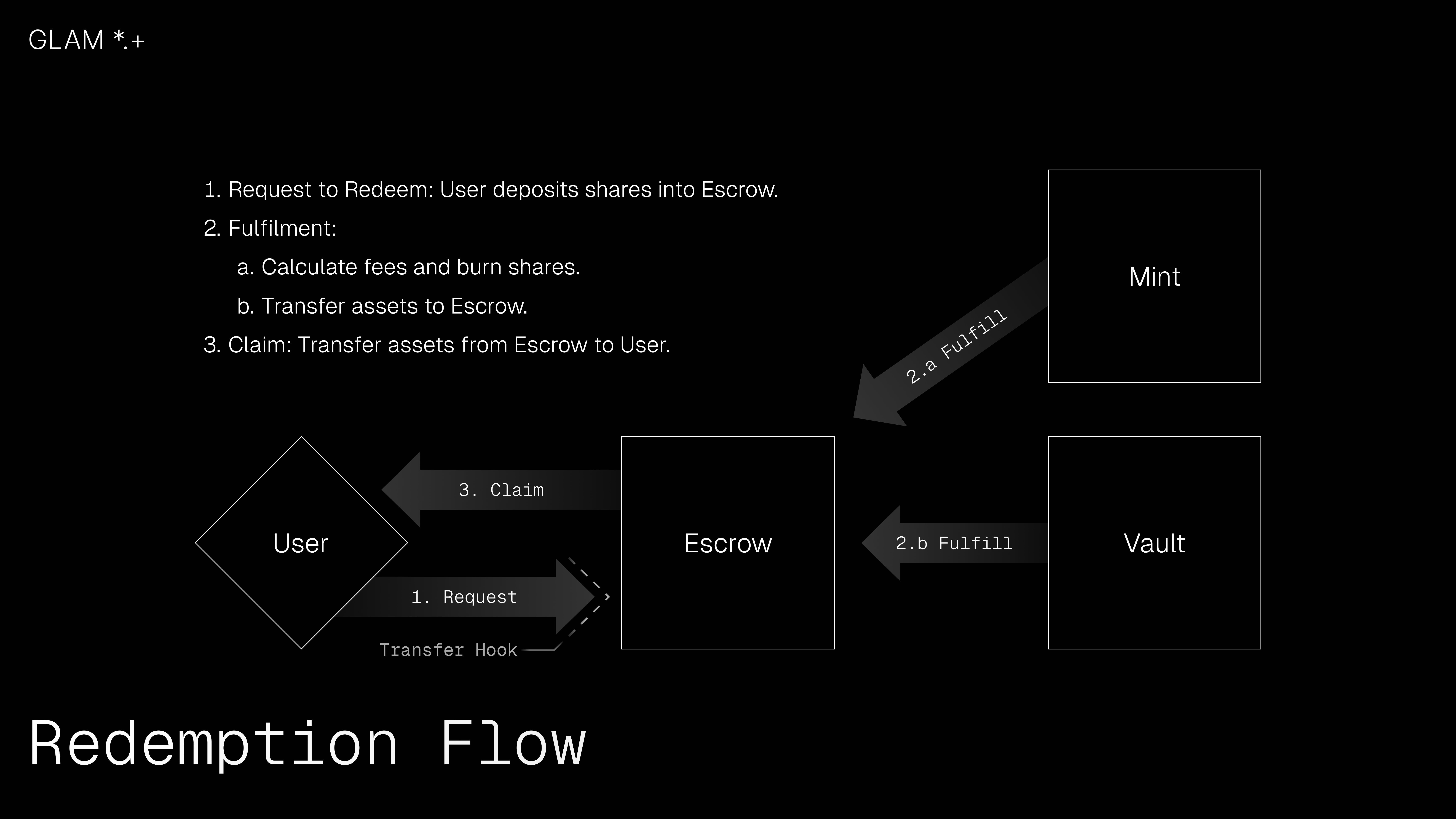
When a user submits a redemption request, it is timestamped and placed in a queue. Once the request becomes eligible (based on the notice period and settlement period), it can be fulfilled. After fulfillment, the user must initiate a claim transaction to complete the redemption.
Queued redemption is recommended for strategies that require liquidity management, batching, or time to unwind positions.
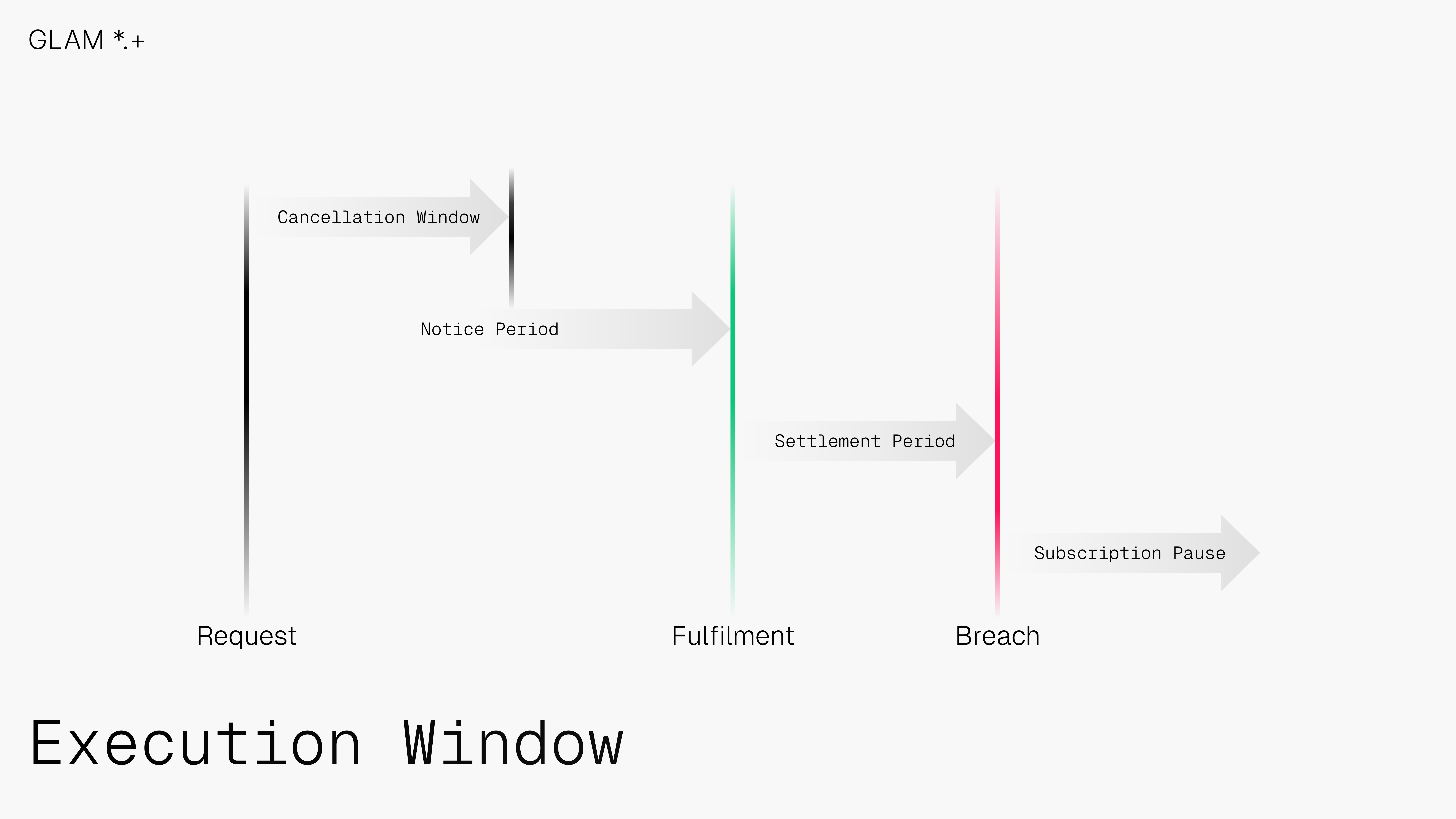
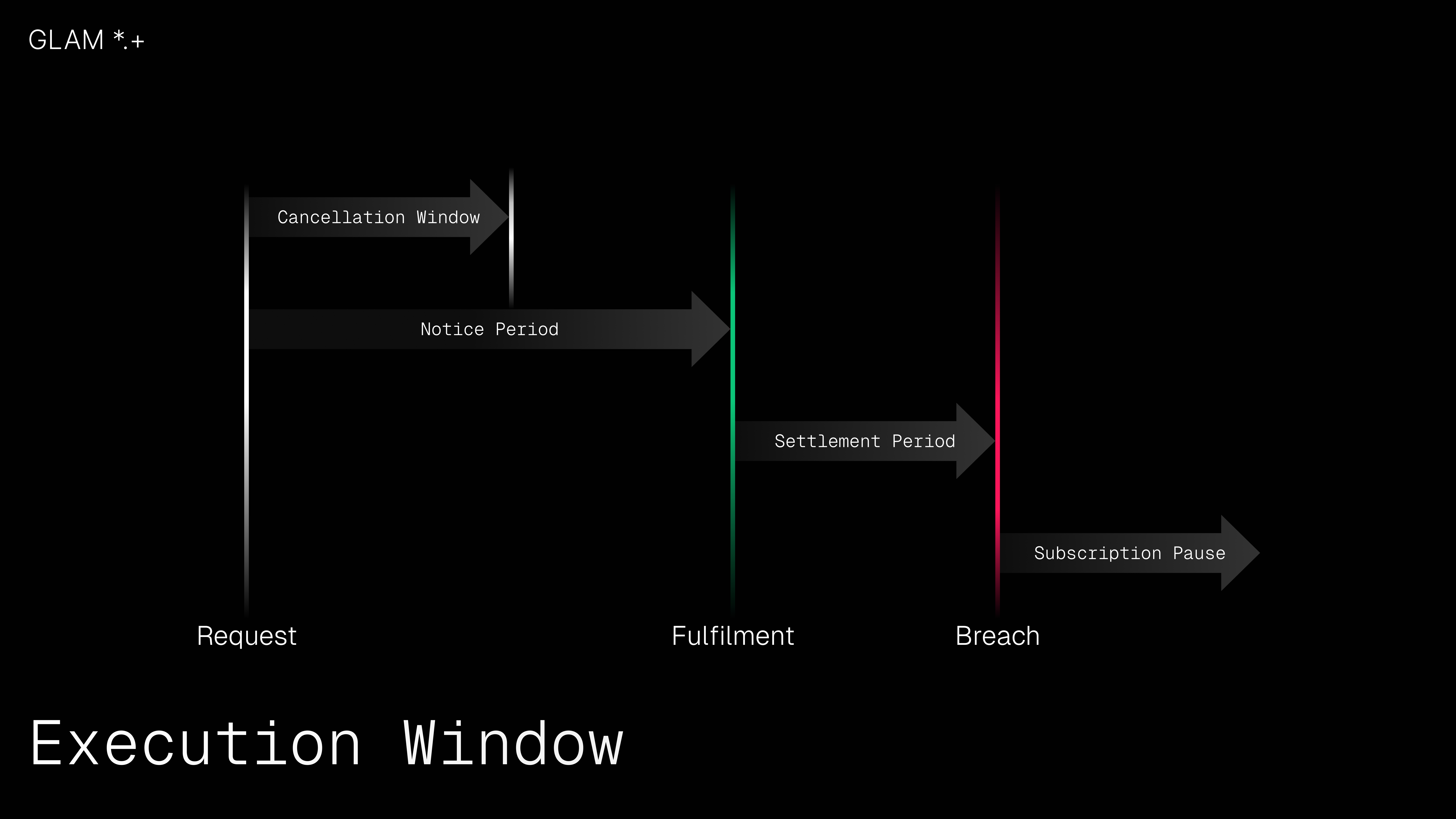
Execution Window
Notice Period
The notice period defines the minimum wait time between a user’s request (to subscribe or redeem) and when it becomes eligible for fulfillment. It is measured in seconds or slots and ensures predictable liquidity planning and fair access.
GLAM supports two notice period types:
- Hard: Requests cannot be fulfilled until the notice period has fully elapsed.
- Soft: Requests may be fulfilled earlier if liquidity is available, but must still respect the maximum notice window.
Settlement Period
The settlement period defines the maximum duration after the notice period during which a request can be fulfilled. It ensures that requests are processed in a timely manner and provides a bounded execution window for managers or external actors.
Cancellation Window
The cancellation window defines the duration after submitting a request during which it can be cancelled by the user. This must be less than or equal to the notice period. Once the cancellation window passes, the request becomes locked for fulfillment.
Permissionless Fulfillment
If permissionless fulfillment is enabled, any actor including users and bots can fulfill eligible requests once they enter the settlement window. If it is disabled, only the vault manager is authorized to trigger fulfillment.
If a subscription or redemption request is not fulfilled after the settlement period has passed, the manager is considered in breach. New subscriptions will be paused until all pending requests have been processed.