

Subscriptions
GLAM tokenized vaults support two types of subscriptions: instant subscription and queued subscription.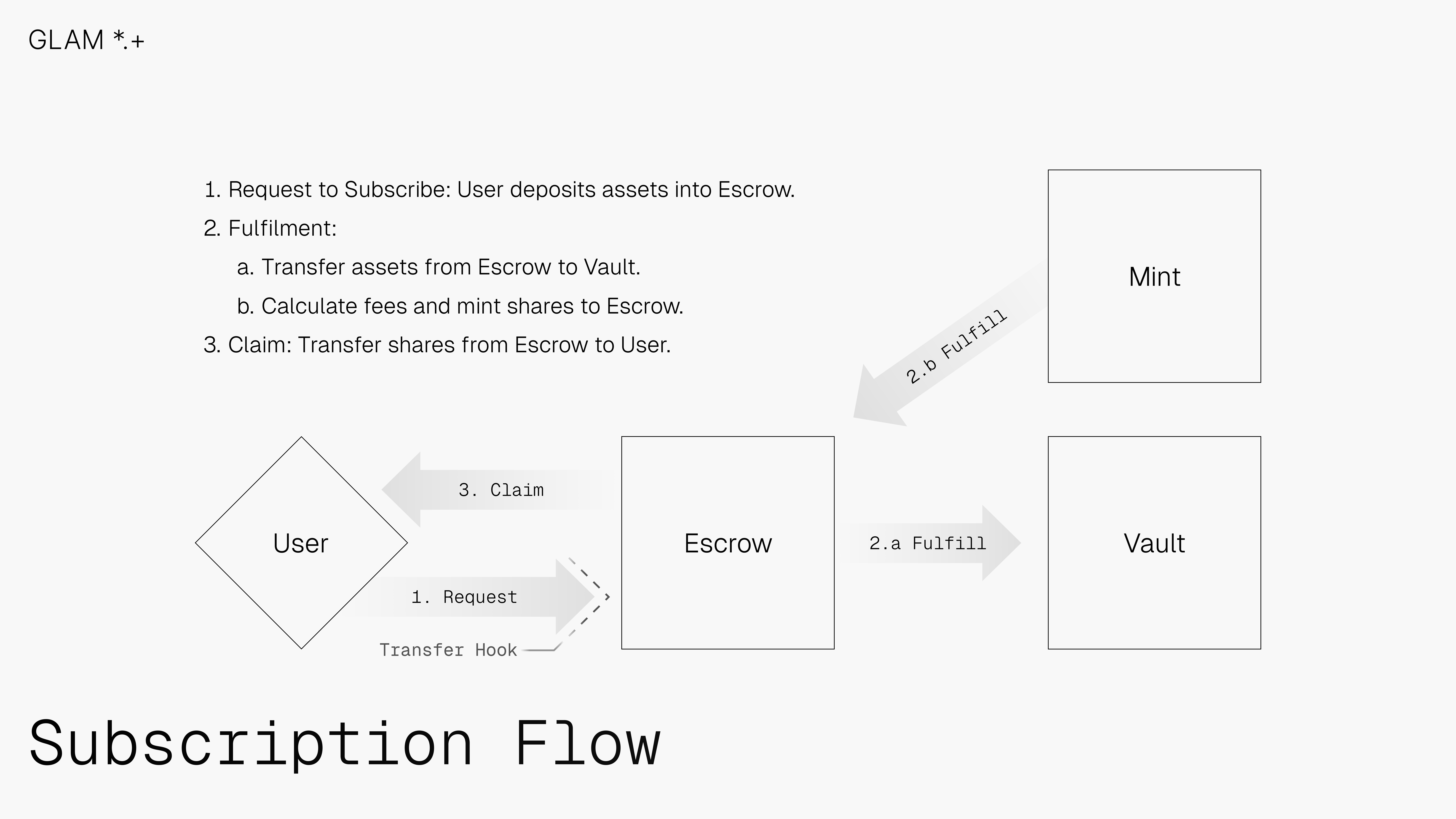
Instant Subscriptions
Vault shares are issued in the same transaction where the user makes the deposit. Instant subscription is preferred if vault AUM can be immediately calculated and the amount of shares can be determined instantly.Queued Subscriptions
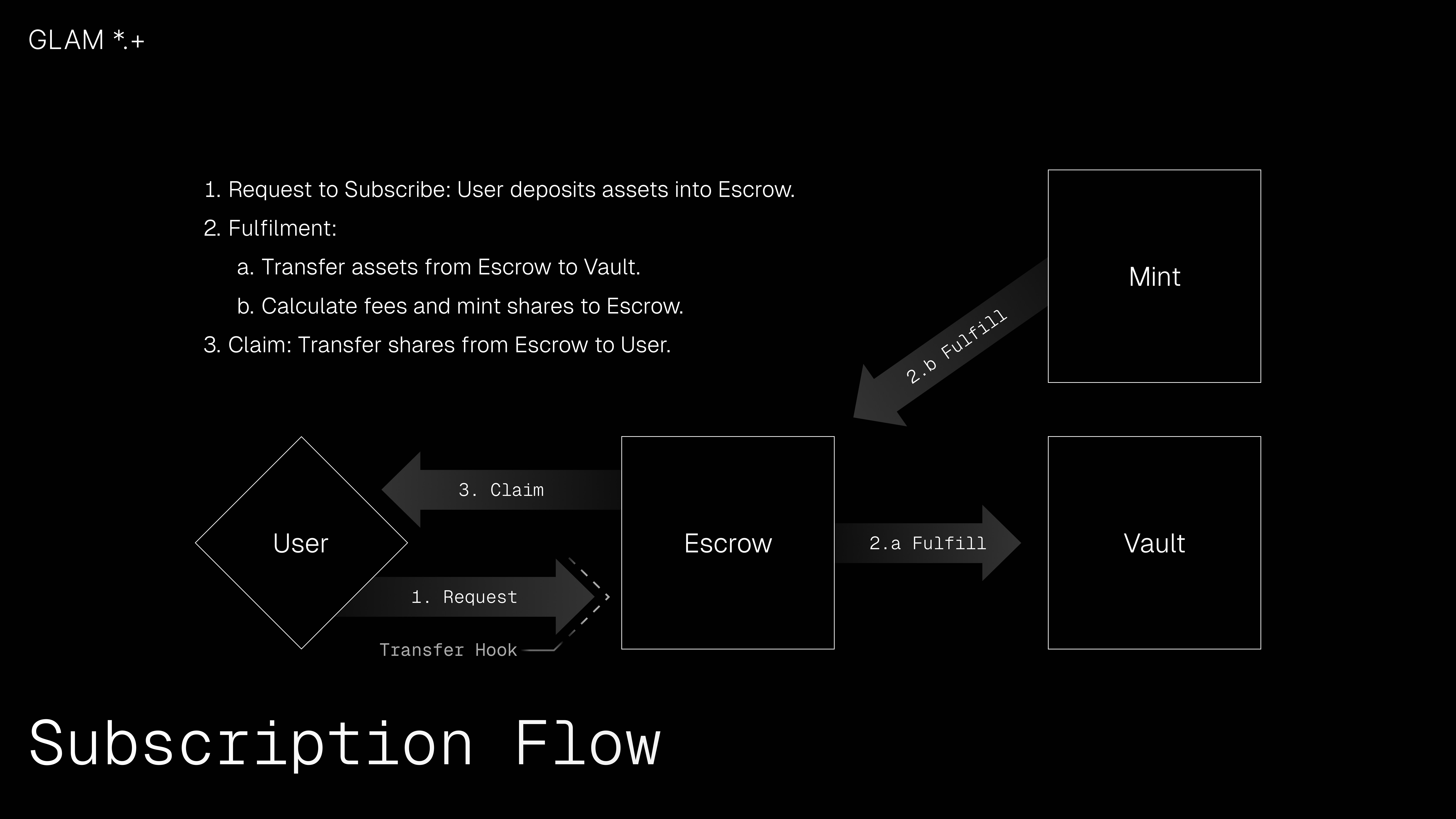
In case vault AUM can only be calculated with a delay, queued subscription should be used. The diagram below shows the subscription flow:Redemptions
GLAM tokenized vaults support both instant and queued redemptions, depending on the strategy and configuration of the vault.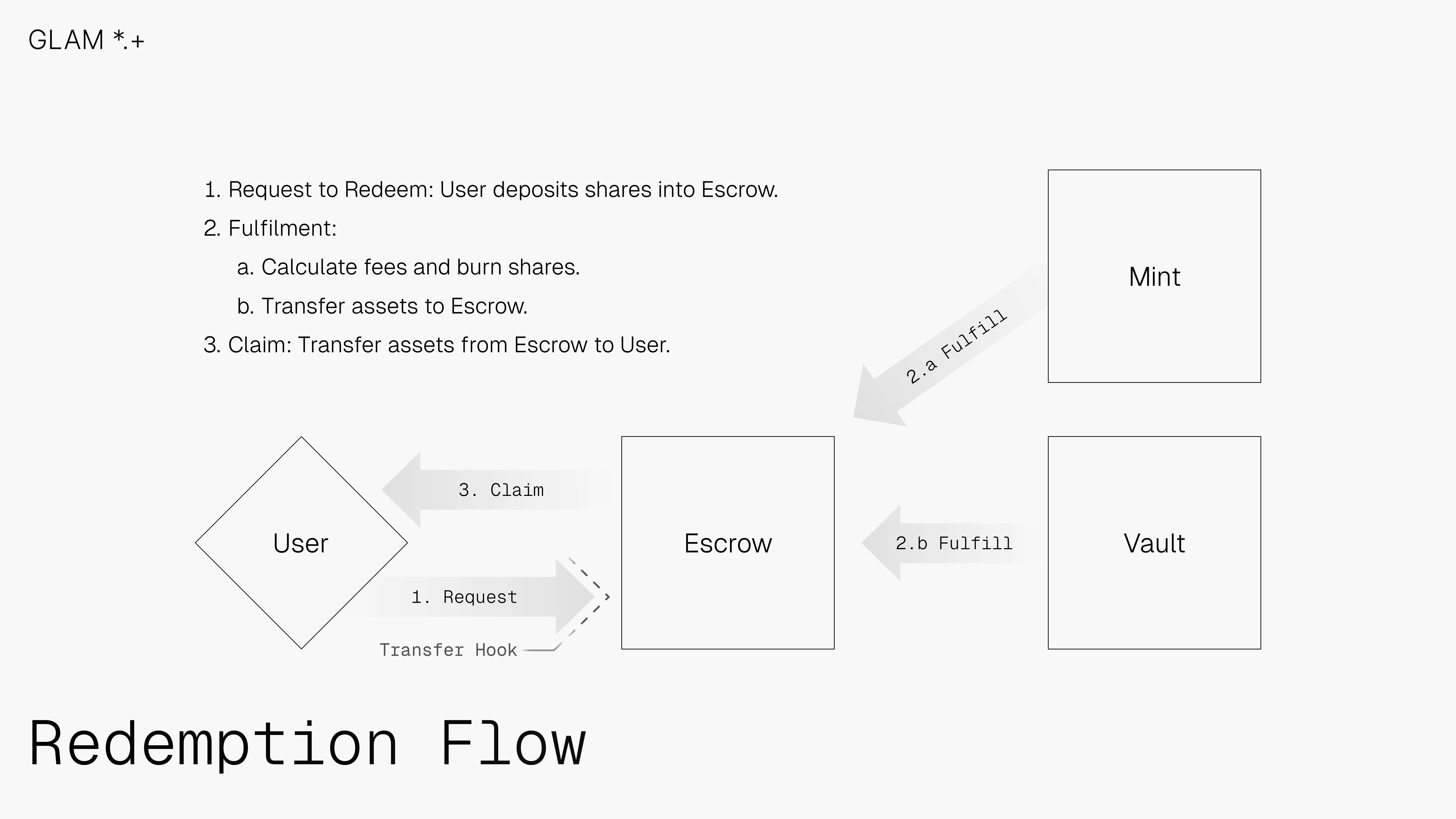
Instant Redemptions
Instant redemption allows users to redeem shares and receive withdrawal assets in a single transaction. This mode is enabled when the vault’s notice period and settlement period are both set to 0. Instant redemption is only possible if the vault has sufficient liquidity to fulfill the request at the time of redemption. This mode is recommended for tokenized vaults with simple, highly liquid strategies (e.g., token baskets).Queued Redemptions
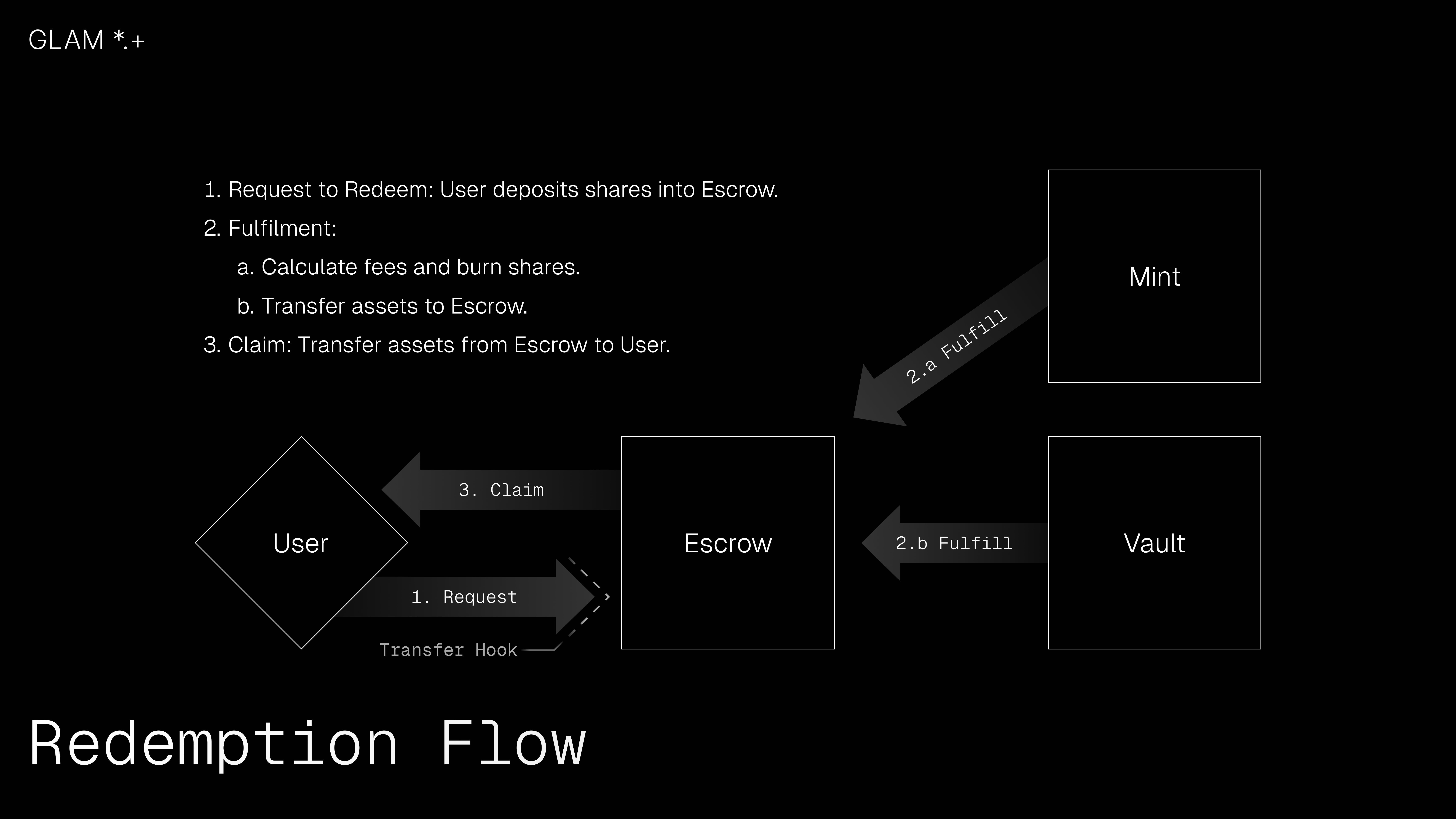
If the vault is configured with a non-zero notice period or settlement period, redemptions are queued and expected to be fulfilled asynchronously. When a user submits a redemption request, it is timestamped and placed in a queue. Once the request becomes eligible (based on the notice period and settlement period), it can be fulfilled. After fulfillment, the user must initiate a claim transaction to complete the redemption. Queued redemption is recommended for strategies that require liquidity management, batching, or time to unwind positions.Execution Window
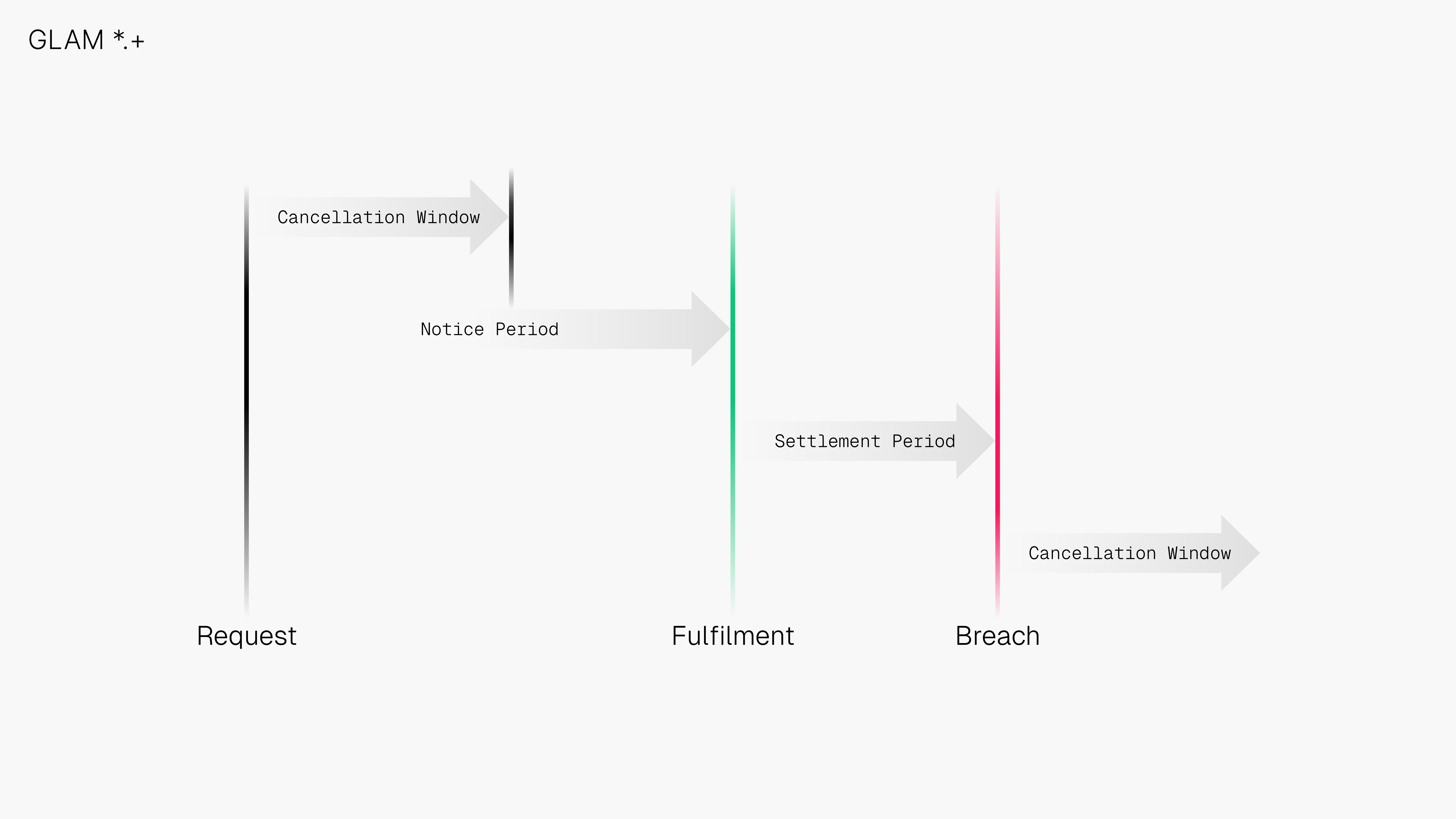
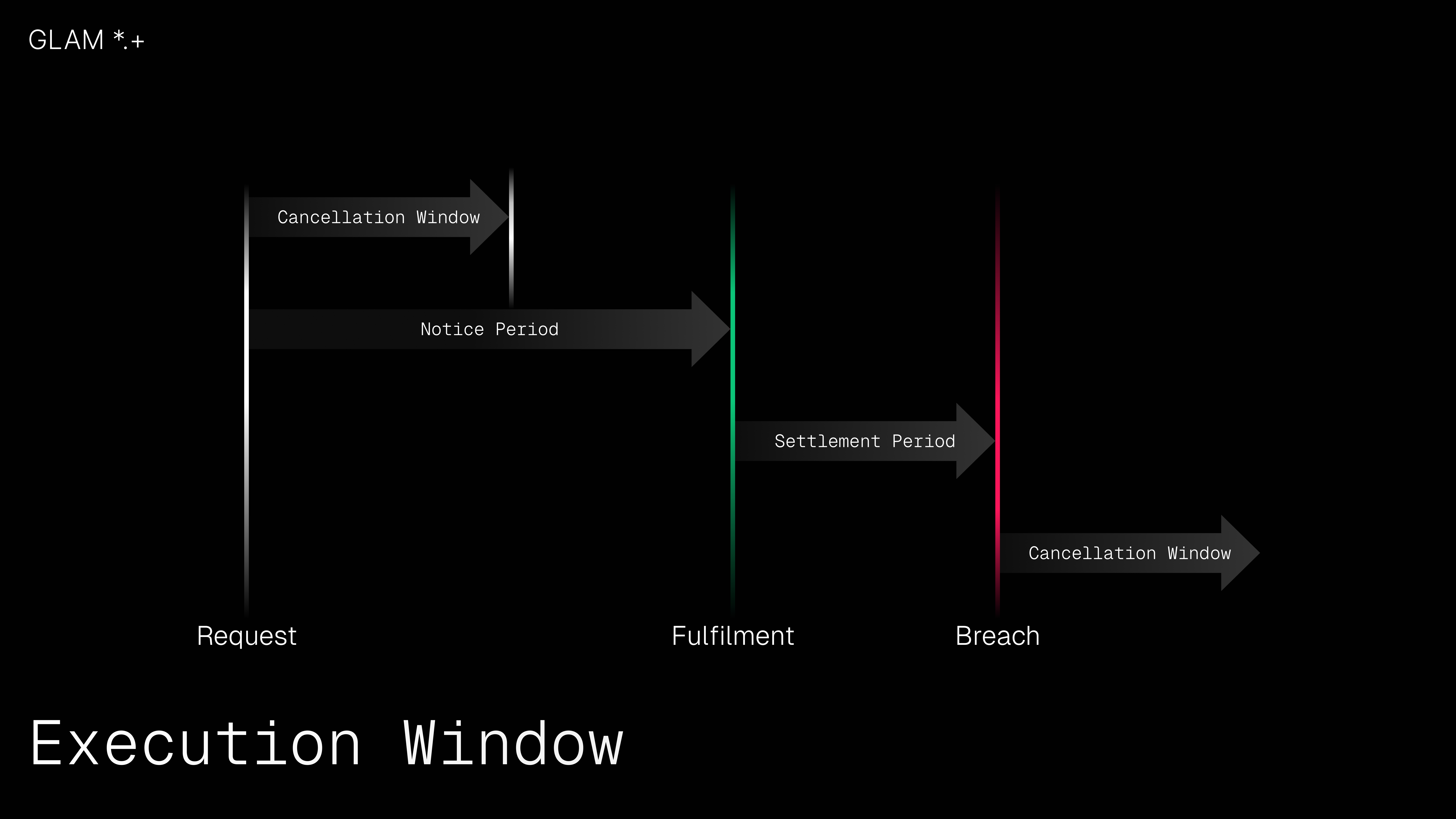
Notice Period
The notice period is the configured lead time for a queued subscription or redemption request. It is measured in seconds or slots. How it affects fulfillment eligibility depends on the notice period type. GLAM supports two notice period types:- Hard: Requests become eligible only after the notice period has fully elapsed.
- Soft: Requests are eligible immediately if liquidity is available; the notice period is advisory and does not block early fulfillment.
- Use Hard when the manager genuinely needs lead time, or when fulfillment must align to a known cutoff:
- Strategy-bound assets that take time to unwind: lending positions (Kamino, Drift), LP positions, perps, native validator unstaking that is gated by epoch boundaries.
- Periodic-NAV or batched funds, where a hard notice aligns requests to a known valuation cutoff and prevents acting on stale or pre-rebalance NAV.
- Fairness and anti-timing: forces a minimum gap between request and execution, so users cannot front-run a NAV update, fee crystallization, or a large rebalance.
- Use Soft for stable, mostly-cash or DEX-liquid vaults where the manager can net requests instantly against on-hand liquidity. Liquid staking vaults that hold tradeable LSTs (e.g. JitoSOL, mSOL) typically fit here; vaults that perform native validator unstaking should use Hard.
Settlement Period
The settlement period defines the maximum duration after the notice period during which a request can be fulfilled. It ensures that requests are processed in a timely manner and provides a bounded execution window for managers or external actors.Cancellation Window
The cancellation window defines the duration after submitting a request during which it can be cancelled. This must be less than or equal to the notice period. A request is cancellable under two conditions:- Within the cancellation window: The request was recently created and is still within the cancellation window (
created_at + cancellation_window > now). This gives users a grace period to cancel immediately after submitting a request. - After the execution window has expired: The request has passed both the notice period and settlement period (
created_at + notice_period + settlement_period < now). This protects investors by allowing them to reclaim their assets if the manager fails to fulfill the request within the promised timeframe.
- The user who submitted the request.
- The vault owner.
- An active delegate with the Mint
CancelRequestpermission.